Encryption and Conditional Access in Satellite TV
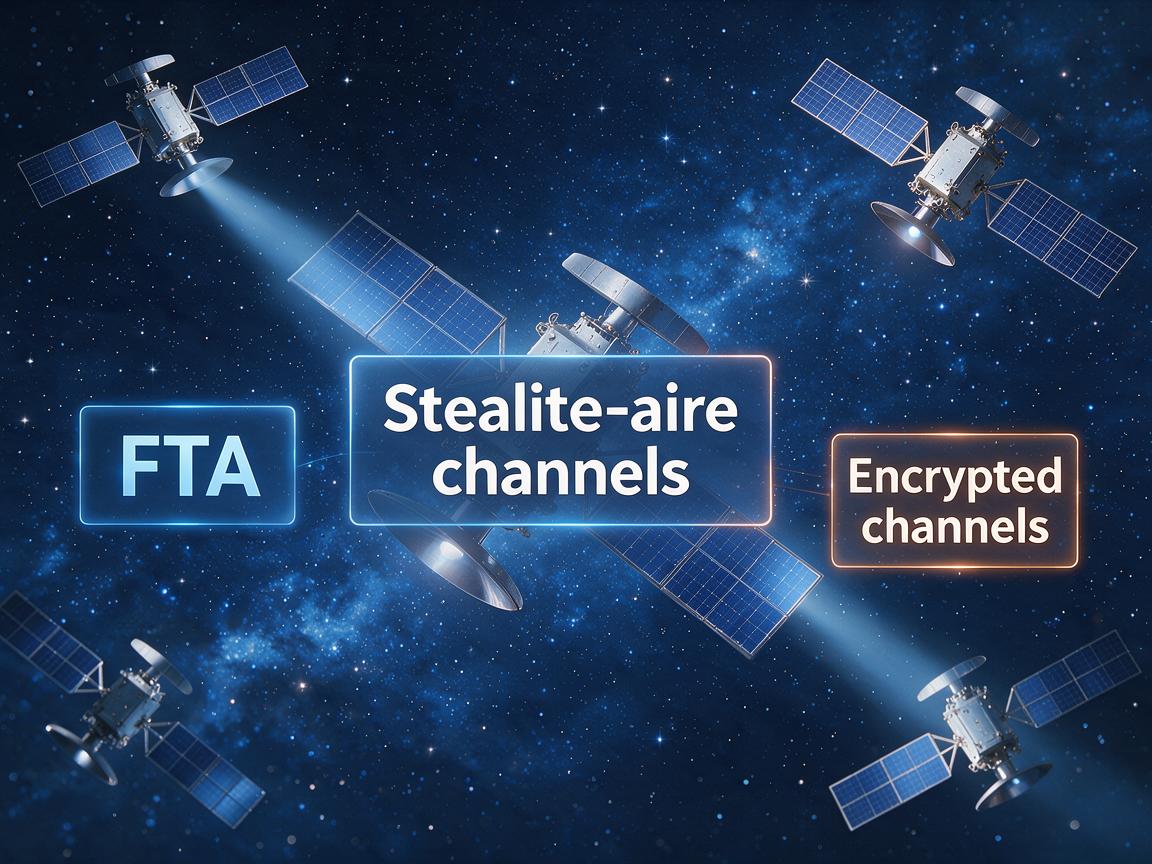
Satellite channels are either free-to-air (FTA) or encrypted. Encrypted channels use a system called conditional access — and understanding it explains why some channels just work and others ask for a card.
Free-to-Air (FTA)
FTA channels are broadcast unencrypted. Any receiver with a dish pointed at the right satellite can watch them, no subscription needed. The European free-to-air lineup is enormous.
Encrypted / Pay-TV
Pay-TV channels are scrambled. You need a valid smart card or conditional access module (CAM) paired with a subscription to decode them.
How Conditional Access Works
The broadcaster encrypts the video. Periodically, it sends the decryption key (the “control word”) on a special encrypted channel. Your valid card receives that key and unlocks the picture. No valid card = no key = black screen.
Common Systems
Various conditional access systems are used across Europe. Your receiver either has a built-in slot for a card, or a Common Interface (CI) slot for a CAM module.
“Scrambled” Message
If your receiver says “scrambled” or “no signal on this channel”, either the channel has moved to encryption, your card has expired, or your subscription does not include it.
What You Can and Cannot Do
Receiving channels you pay for is fine. Sharing cards or using unauthorised decryption is illegal. Stick to legitimate FTA or a paid subscription.
Conditional access is the lock on pay-TV. FTA is the unlocked channel next door — and in Europe, the unlocked side is surprisingly large.