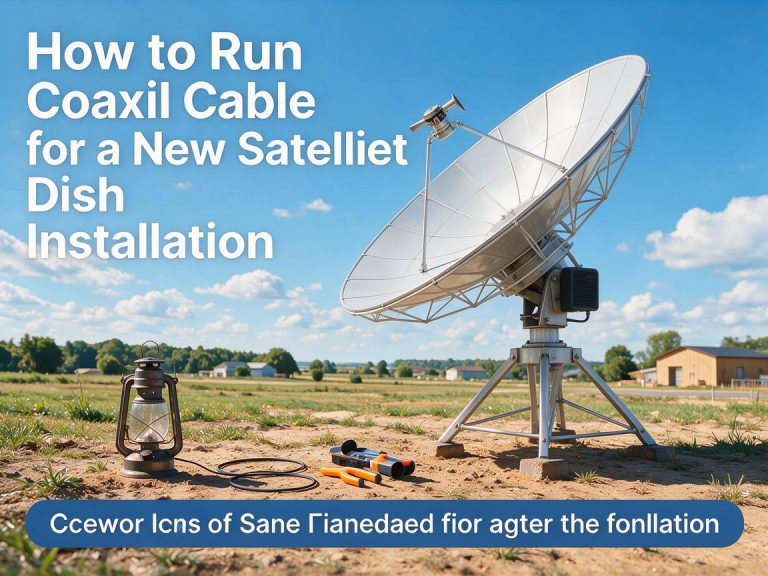
Satellite Dish Installation in Winter: Cold Weather Tips
Winter is the worst time to install a satellite dish — frozen ground, slippery ladders and short days — but sometimes it has to be done. With a few precautions, a winter install can go smoothly.
Why Winter Is Hard on Installs
Rain fade is worse in winter, and heavy wet snow on the dish attenuates signal. If you are installing in December, remember that the alignment margin you leave now will be tested by January's storms.

Personal Safety in the Cold
- Warm layers but not bulky gloves — you need to feel spanners. Thin thermal gloves under a pair of work gloves work well.
- Watch for ice on the ladder rungs. Knock it off before climbing.
- Work in short bursts — cold hands lose dexterity fast.
- Tell someone where you are and when you expect to finish.
Concrete and Cold Weather
If you are concreting a ground pole, do not pour concrete on a frosty night — it will not cure. Wait for a day above freezing, or use a fast-setting outdoor concrete rated for cold.
Cable and Connectors in the Cold
Coax goes stiff in freezing weather. Uncoil it the night before indoors so it is flexible on the day. Make F-connectors in the warm, not on a windy ladder.
Alignment in Short Days
Use a head torch. A digital signal meter with a backlight is essential. Align in the late morning, when the light is best and the frost has melted off the roof.
Leave Extra Rain Margin
Because winter brings heavy rain and wet snow, peak the dish a little hotter than usual. Aim for 90% quality, not 80%. That extra margin will carry you through the storms.
After the Install: Snow on the Dish
Tell the user to brush snow off the dish after heavy snowfall — a snow-covered dish loses signal. Never pour hot water on it (thermal shock can crack the LNB).
A winter satellite install is uncomfortable but doable. Take it slowly, watch the ladder, and leave yourself extra signal margin for the weather ahead.