Satellite Dish Installation on a Balcony: What You Need to Know
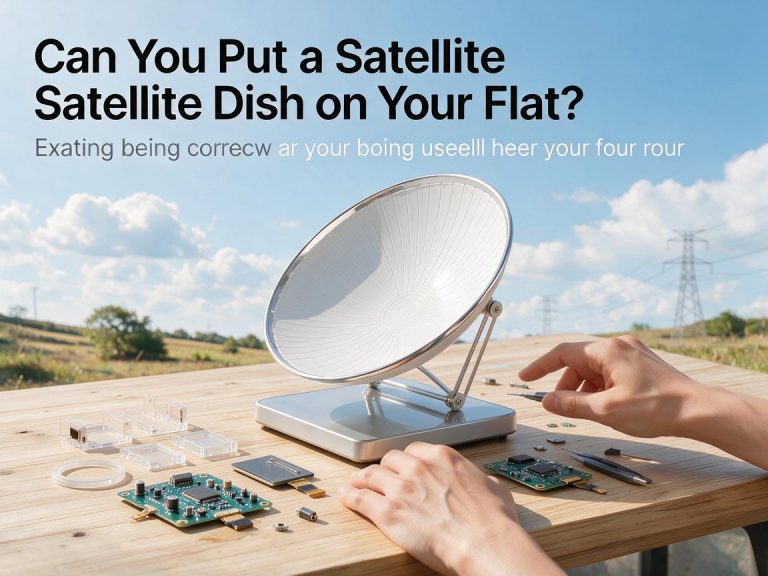
City dwellers often assume satellite TV is impossible without a roof. In reality, a balcony is often the perfect mounting spot — provided it faces the right way and the building does not block the southern sky. Balcony satellite dish installation has its own rules, however, because wind loading, landlord permission and cable routing all work against you.
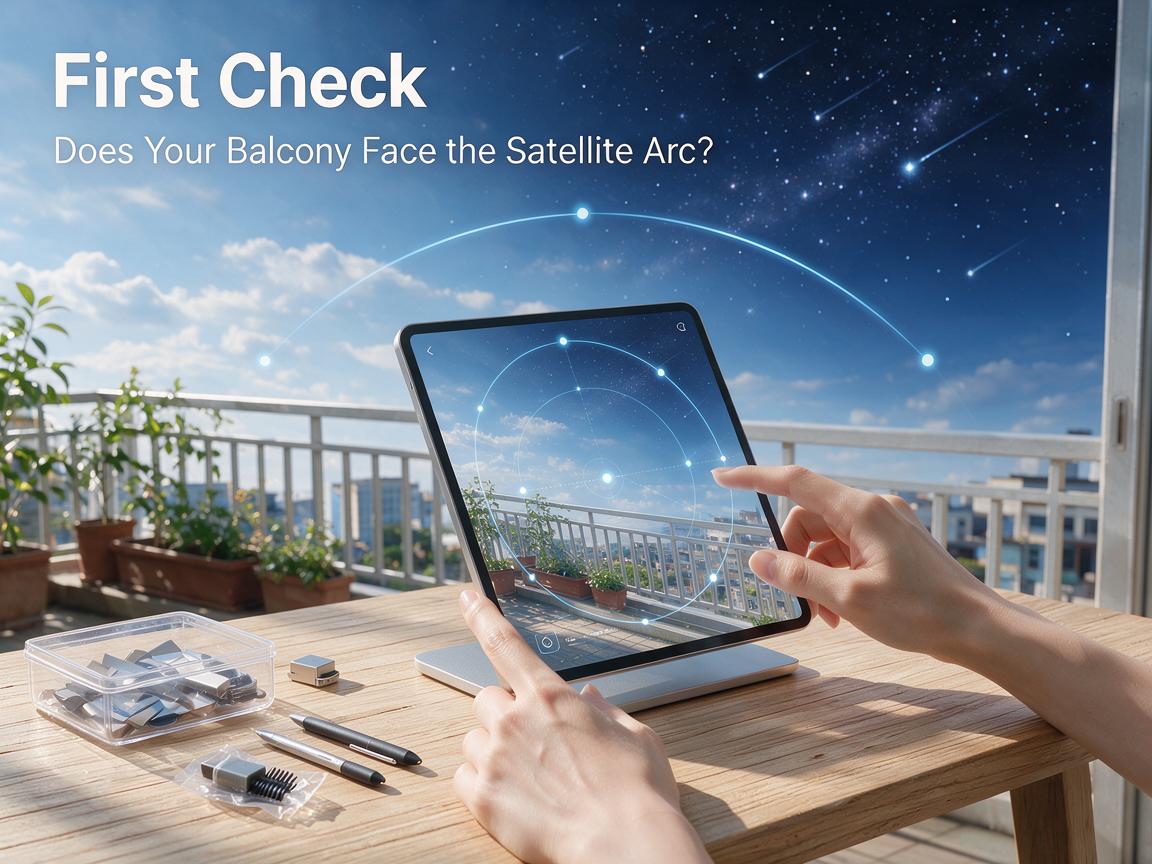
First Check: Does Your Balcony Face the Satellite Arc?
In the northern hemisphere, satellites lie due south (roughly from southeast to southwest). Before buying anything, stand on your balcony at the time of day when the sun crosses that part of the sky and see what you can see. If a tall building or a dense band of trees blocks the southern view, a balcony mount will not work — no amount of dish size will punch through concrete.
Size Matters Less in the City
Because balcony signals are usually clear line-of-sight to a strong satellite, a small 45–60 cm dish is often enough. The advantage is obvious: a tiny dish is lighter, less visible, and far less likely to annoy neighbours or violate lease rules.
Mounting Options on a Balcony
- Rail clamp mount: clamps onto the balcony railing without drilling. Best for renters. Choose a stainless-steel clamp rated for the dish size.
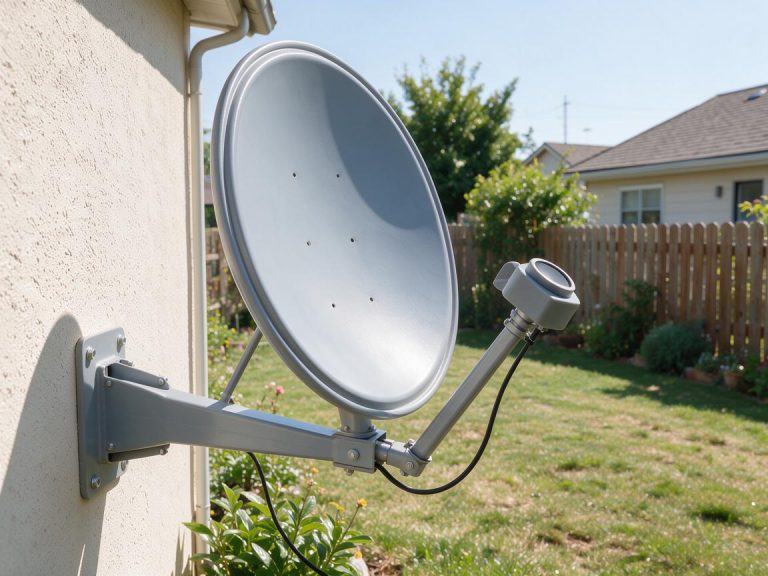
- Wall bracket: fixed to the side wall of the balcony. Stronger and more stable, but requires drilling.
- Freestanding ground / patio mount: heavy base sitting on the balcony floor. No drilling at all, but bulky and a wind hazard if not ballasted.
Cable Routing Through a Flat
Run the cable along the balcony wall, through a window vent or under the door seal. Flat “satellite window feed” cables are available — very thin coax that slips under a closed window without drilling. Never trap the cable in a closing sash; it will fail within months.
Wind and Vibration
A balcony dish is exposed to more buffeting than a roof-mounted one. Use the smallest dish that gives you margin, and brace the arm. A dish that moves a millimetre in the wind will pixelate whenever a gust hits.
Legal and Neighbour Considerations
Some countries and buildings permit small dishes under EEC “user rights” rules; others require planning permission. Check your lease and your local regulations. A discreet, small dish painted to match the railing causes far fewer complaints than a gleaming white 90 cm model.
Alignment Tips for Balcony Mounts
Because you are close to the receiver (usually in the same room), you can use the receiver's own signal screen — no separate meter needed. Have a second person watch the TV while you nudge the dish. Evenings are a good time to align: you can see the signal meter and the sky at the same time.
A balcony satellite dish is absolutely doable, but treat it as a small, light, discreet installation. Check the view first, choose a no-drill mount if you rent, and weatherproof the connector — that is 90% of a successful city install.