Wall Mounting a Satellite Dish: Bracket Selection and Fixings
A wall bracket is the most common way to fix a satellite dish in a suburban garden. Done properly, it is invisible, weatherproof and lasts decades; done cheaply, it rusts, rattles and pulls away from the wall. This guide covers choosing the right bracket and fixing it correctly.
Buy the Right Bracket, Not the Cheapest
Avoid “universal” brackets made from thin painted steel. Look for:
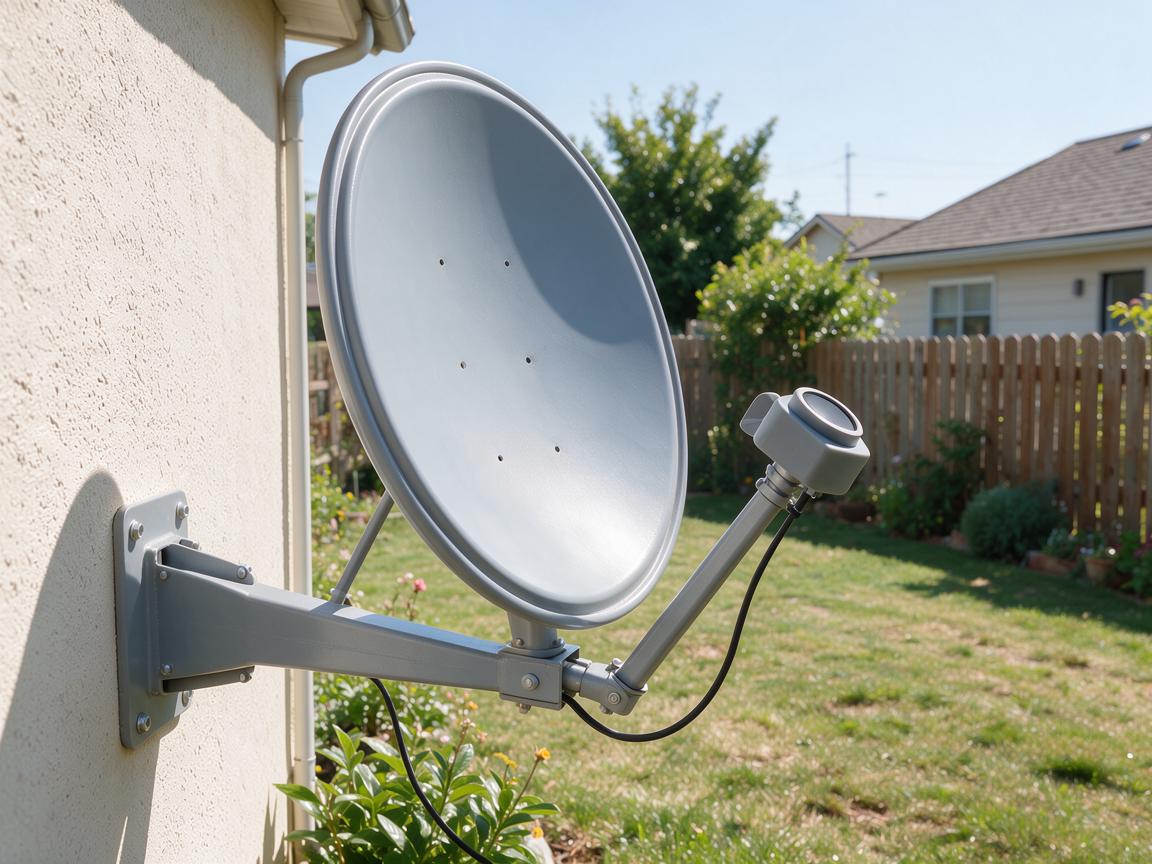
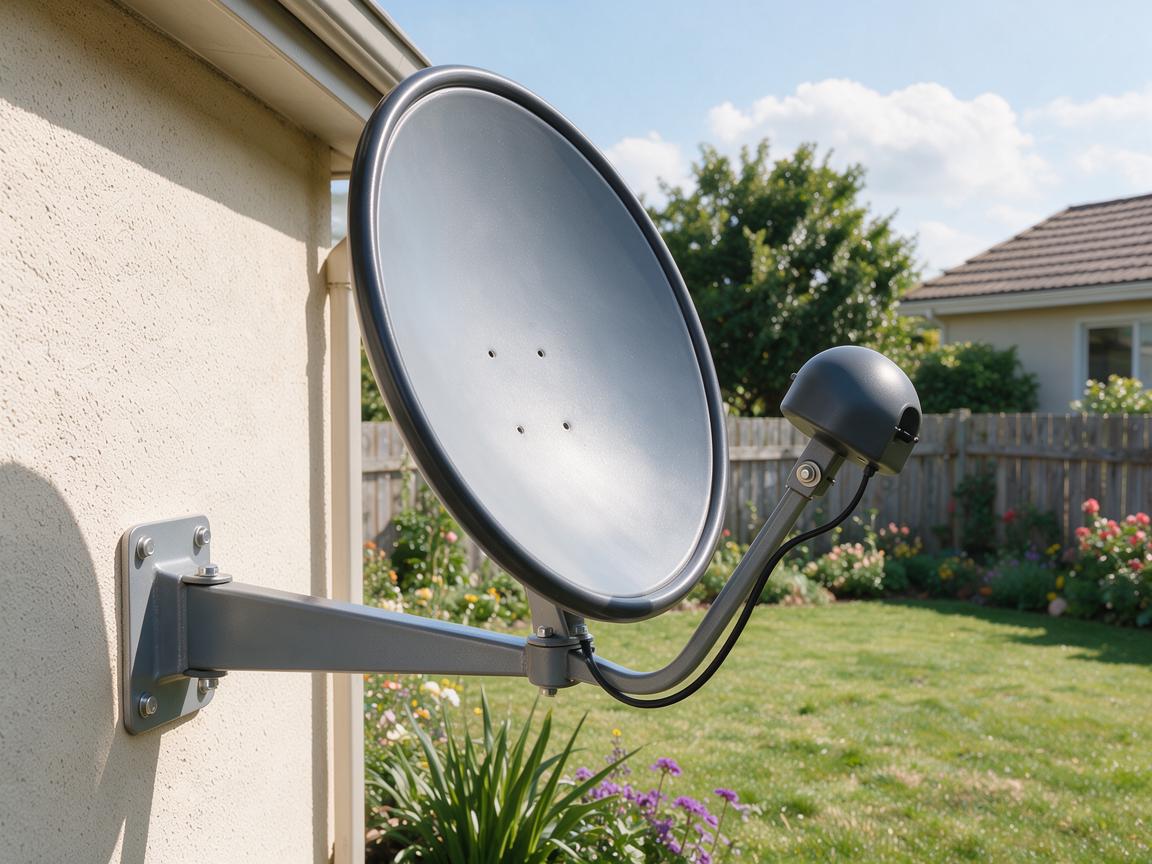
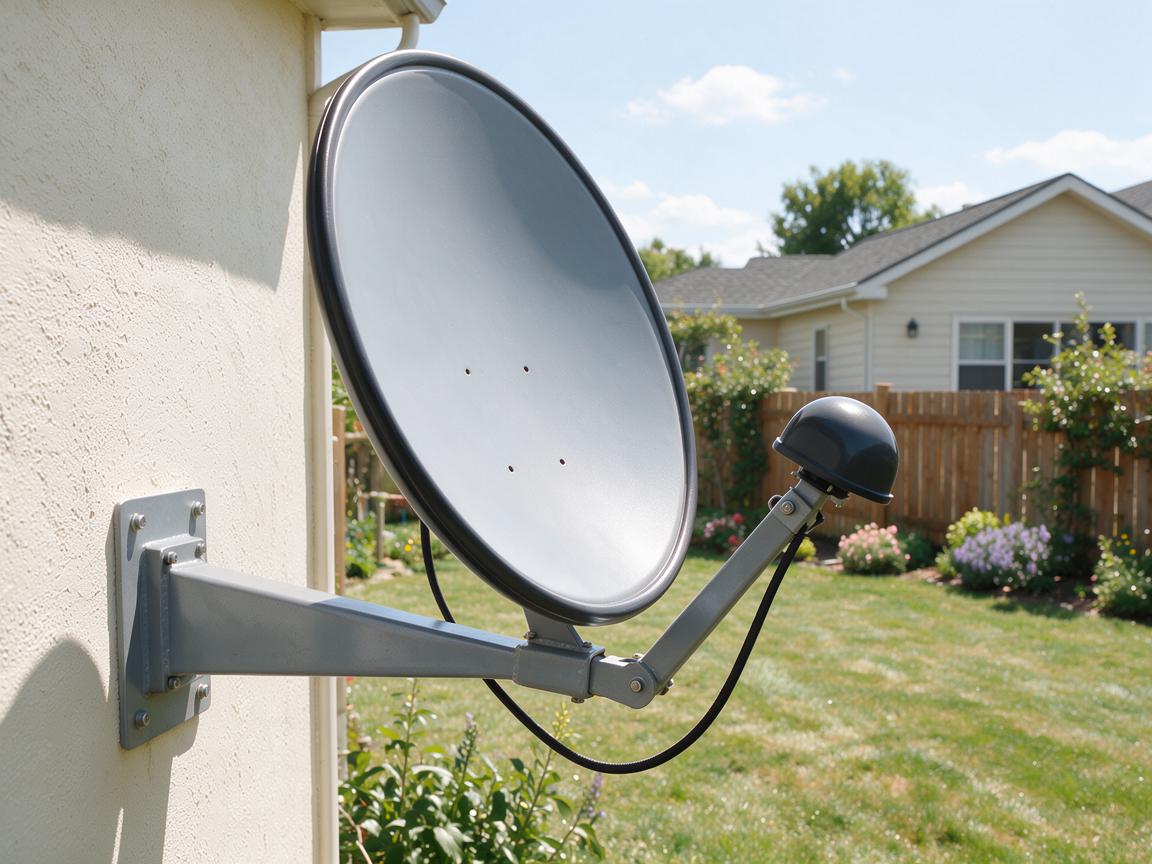
- Galvanised or powder-coated steel with at least 2 mm thickness.
- A stand-off distance that clears your roof tiles — usually 30–45 cm.
- Four fixing points where possible, not two.
For dishes over 80 cm, choose a bracket rated for the next size up — the wind load on a big dish in a storm is surprising.
Which Wall to Fix To
Fix to a solid external wall — brick, block or stone. Avoid:
- Hollow cavity walls without proper cavity fixings.
- Timber-framed walls with only thin cladding.
- Rendered walls where you cannot tell what is behind.
If in doubt, use a stud finder and drill into the brick, not the mortar.
Fixings: The Hidden Detail
Use heavy-duty wall plugs (10–12 mm) and stainless steel bolts. Rawlbolts (shield anchor bolts) are the gold standard — they expand inside the brick and cannot pull out. Never use plastic wall plugs into old, crumbly brick for a dish over 60 cm.
Wall Height and Clearance
Mount the bracket so the dish sits 1–2 metres up the wall. High enough to clear fences and shrubs, low enough that you can reach the LNB with a short ladder. Ensure the dish does not overhang a footpath where it could be bumped.
Fitting the Bracket Step by Step
- Hold the bracket against the wall at the chosen height and mark the four holes with a pencil through the fixing slots.
- Drill the holes to the correct depth — usually 60–70 mm.
- Blow out the dust, insert wall plugs or Rawlbolts.
- Bolt the bracket on, checking it is level.
- Fit the dish pole clamp and then the dish.
Dealing with Cavity Walls
In a cavity wall, the outer leaf is often only 100 mm of brick. Use longer shield anchors that grip deep into the outer leaf, or special cavity wall ties. Never rely on the inner leaf — it is separated by a 50 mm gap and cannot take the load.
Finishing: Paint and Seal
Once the dish is aligned, touch up any exposed bolt heads with zinc-rich paint to stop rust. Run a bead of exterior silicone around the backplate if the wall is rendered. A wall-mounted dish should never need repainting inside your lifetime.