How to Run Coaxial Cable for a New Satellite Dish Installation
The coaxial cable is the unsung hero of a satellite installation. Even a perfectly aligned dish will pixelate and drop out if the cable run is too long, too thin, or badly jointed. This guide explains how to choose and run satellite coax correctly.
Which Cable: CT100 / WF100 / WF65
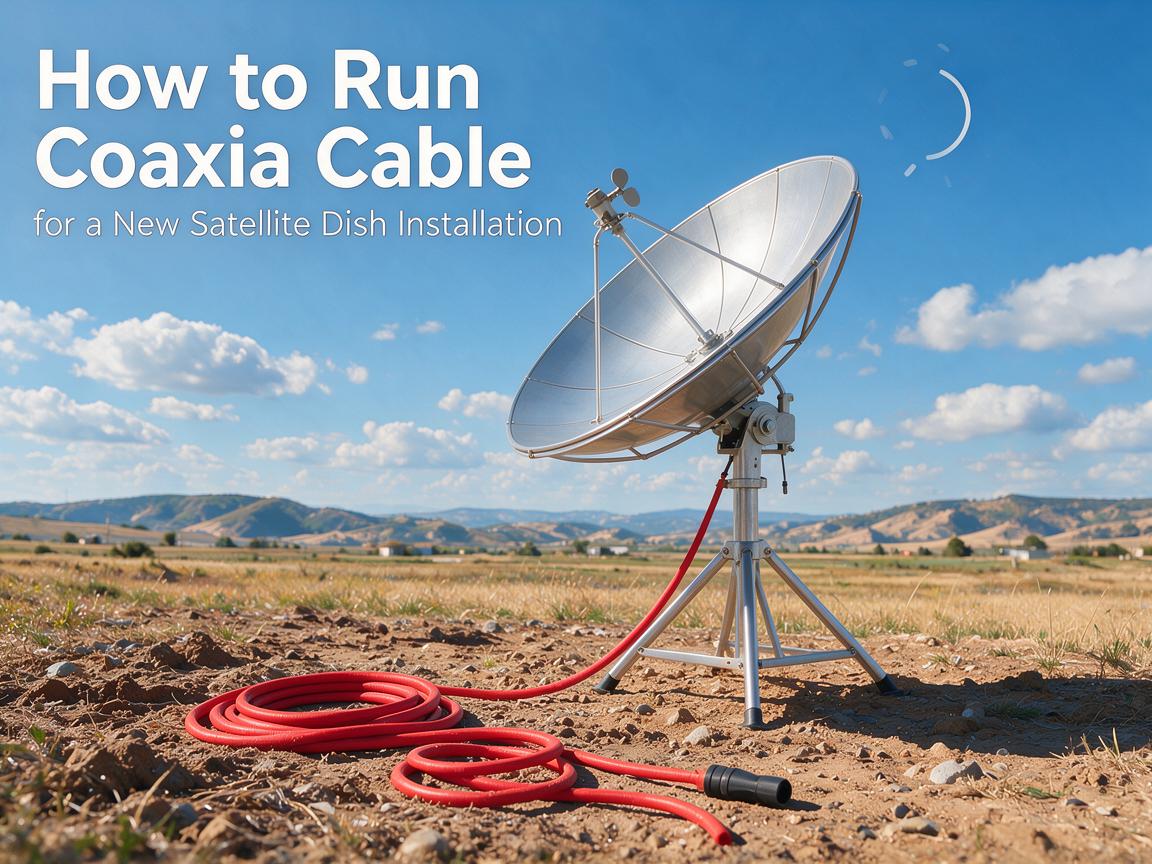
Use low-loss satellite-grade coax, usually labelled CT100, WF100 or RG6. These have a solid copper centre conductor, good braid coverage and a foam dielectric that keeps signal loss low at satellite frequencies. Never use old TV downlead (RG59) — its losses at L-band are too high and HD/4K channels will fail to lock.
Cable Length Limits
With WF100, a run up to about 60 m is fine. Beyond that, expect extra signal loss. If your run is longer, use a slightly larger dish to compensate, or fit an inline line amplifier close to the receiver (never at the LNB end).
Indoor vs Outdoor Cable
The part of the cable exposed to UV must be outdoor-rated. If you must join indoor and outdoor cable, put the joint inside a waterproof box — never bury a bare joint in the ground.
Running the Cable
- Clip cable every 30 cm on walls, every 50 mm in lofts.
- Keep at least 20 cm away from mains power cables to avoid interference; where they must cross, cross at 90 degrees.
- Do not bend coax tighter than about 5× its diameter — a sharp kink ruins the screen.
- Leave a service loop at both ends.
F-Connectors: The Most Common Failure Point
Bad F-connectors cause more “satellite problems” than bad LNBs. Strip the outer sheath back carefully, fold the braid back, trim the foil, and leave the foam dielectric exposed. Screw the connector on until the copper centre pin just protrudes. Trim the pin to about 7 mm.
Wall Entry and Weatherproofing
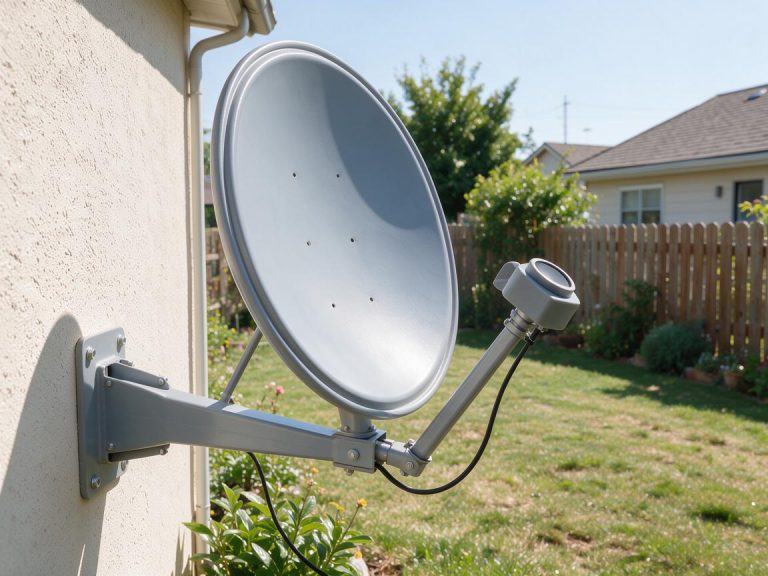
Drill a downward angle through the wall. Use a rubber grommet. On the outside, seal around the cable with exterior mastic. At the LNB end, wrap the connector in self-amalgamating tape, stretching it as you go, so it bonds into a waterproof rubber sleeve.
Inside the House
Run the cable down to where the receiver sits. If you plan to have a second TV later, consider running two cables now — it is far cheaper than re-drilling later. Label each cable at both ends so future you knows which is which.
A clean cable run is invisible but pays off for years: no intermittent pixelation, no mysterious rainy-day dropout, and no frantic rooftop troubleshooting.